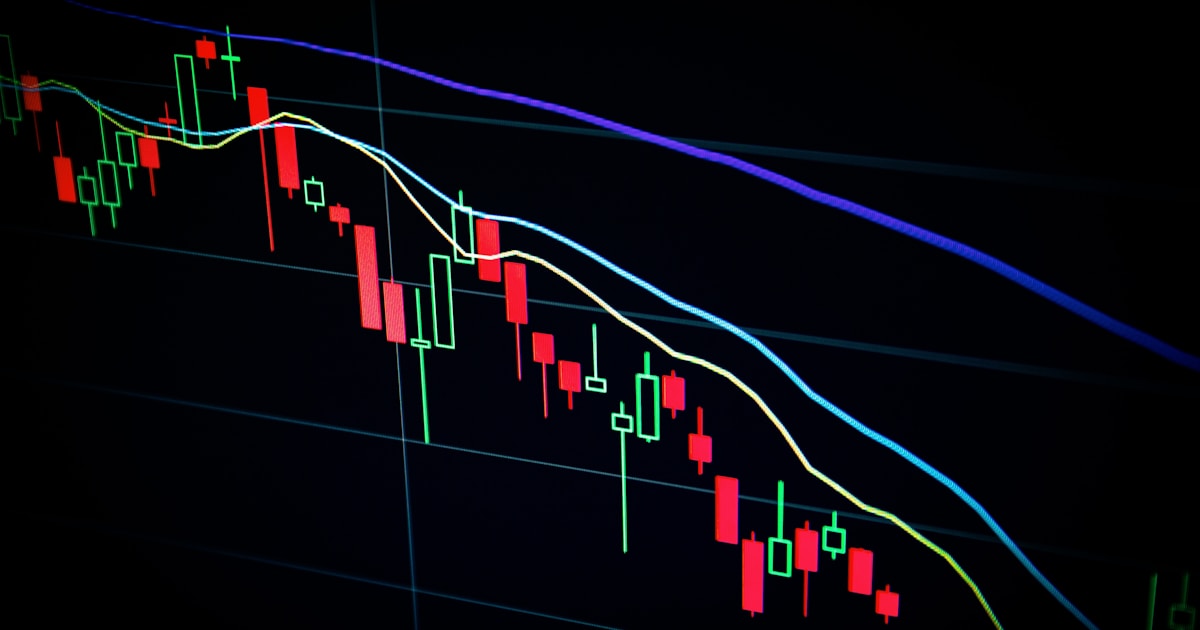
Bitcoin price chart technical analysis is more critical than ever in 2026, as BTC fluctuates within a relatively tight $95,000 to $105,000 range. Understanding how to read these charts can provide traders and investors with a decisive edge, especially given Bitcoin’s recent consolidation after hitting all-time highs earlier this year. Technical analysis combines historical price data, volume, and chart patterns to forecast potential price movements — a must-have skill in today’s volatile crypto markets.
What strikes me here is how on-chain metrics from Glassnode show decreasing volatility but increasing accumulation by long-term holders. This behavioral shift means price charts now reflect stronger support levels, making the right technical read essential to avoid costly missteps.
📊 KEY DATA
$95,000 - $105,000
2.8%
64.3% of total supply
$12.7B (CoinMarketCap)
Why Bitcoin Price Charts Are the First Line of Defense
Price charts visually represent Bitcoin’s price over time, allowing traders to identify trends, support/resistance levels, and key reversal points. In 2026, with Bitcoin’s price consolidating near $100K, charts have become the frontline tool to distinguish between minor corrections and the start of major bull or bear phases.
Understanding Candlestick Basics
Candlesticks are the bread and butter of technical analysis. Each candle on a Bitcoin chart shows the opening, closing, high, and low price for a given period—whether that’s 1 minute, 1 day, or 1 week. Traders use patterns like doji, hammer, and engulfing candles to infer market sentiment. For example, a hammer candle after a downtrend often signals a potential reversal.
Volume as a Confirmation Tool
Volume measures how much Bitcoin is traded during a specific period. High volume confirms price moves—meaning a breakout above $105K with strong volume is more likely to sustain than one with weak volume. According to CoinMarketCap, daily volume averaging $12.7 billion in July 2026 supports robust price action analysis.
Most Reliable Technical Indicators for Bitcoin in 2026
While there are dozens of technical indicators, some stand out for their predictive power in Bitcoin’s current market environment.
Relative Strength Index (RSI)
- RSI measures overbought or oversold conditions on a scale from 0 to 100.
- An RSI above 70 suggests Bitcoin may be overbought, signaling a potential pullback.
- Conversely, an RSI below 30 indicates oversold conditions and possible rebound opportunities.
- In mid-2026, Bitcoin’s RSI has averaged around 55, reflecting balanced momentum.
Moving Averages (MA)
- The 50-day and 200-day moving averages smooth out price data to identify trends.
- A “golden cross,” where the 50-day MA crosses above the 200-day MA, historically precedes bull runs.
- Bitcoin experienced a golden cross in early 2026, supporting its sustained rally above $90K.
MACD (Moving Average Convergence Divergence)
- MACD tracks momentum by comparing two moving averages.
- Positive MACD values suggest bullish momentum, while negative values signal bearish trends.
- Recent MACD crossovers align with Bitcoin’s price surges and corrections, making it a useful signal for traders.
Key Chart Patterns Trading Bitcoin Holders Need to Know
Recognizing patterns can help traders anticipate potential price moves. Here are the most relevant for Bitcoin right now:
Ascending Triangle
This bullish pattern forms when price hits a horizontal resistance around $105K but creates higher lows, indicating increasing buying pressure. A breakout above $105K could trigger a strong upward move.
Head and Shoulders
Conversely, this bearish reversal pattern signals a potential drop if Bitcoin fails to hold key support near $95K. Traders watch for volume spikes to confirm the pattern.
Timeline: Recent Bitcoin Price Chart Developments in 2026
- January 2026: Bitcoin breaks above $90,000 after the golden cross of 50-day and 200-day moving averages.
- March 2026: Price briefly touches $105,000 but fails to sustain, forming an ascending triangle pattern.
- May 2026: RSI dips to 32 during a sharp correction, indicating oversold conditions.
- June 2026: MACD crossover signals renewed bullish momentum as Bitcoin rebounds from $95,000.
- July 2026: Consolidation continues between $95,000 and $105,000, with volume steady around $12B daily.
| Indicator | What It Shows | Current Bitcoin Status |
|---|---|---|
| RSI | Overbought/Oversold Momentum | ~55 (Neutral) |
| 50/200 MA | Trend Direction | Golden Cross since Jan 2026 (Bullish) |
| MACD | Momentum Shifts | Positive with recent bullish crossover |
| Volume | Trade Confirmation | Avg. $12.7B daily, steady |

Key Takeaways for Bitcoin Traders and Holders
- Master candlestick patterns like hammer and engulfing candles for early reversal signals.
- Use RSI and MACD to gauge momentum shifts and avoid buying into overbought conditions.
- Watch moving averages for trend confirmation; the golden cross in 2026 signals ongoing bullish bias.
- Volume is king: Confirm breakouts or breakdowns with strong trading volume to reduce false signals.
- Combine on-chain data from sources like Glassnode with technical analysis for a holistic view of Bitcoin’s health.
Stay Ahead of the Market
Get daily crypto analysis, price breakdowns, and on-chain insights from Bitcoin Fast Community — updated 4x daily.
Read All Analysis →Free Tool
Bitcoin ROI Calculator
Calculate the exact return on any Bitcoin investment since 2012 — and compare against S&P 500 and gold.
Related Crypto Guides
Frequently Asked Questions
Q: What is the most important technical indicator for Bitcoin in 2026?
A: The 50-day and 200-day moving averages are critical, especially the golden cross which occurred in January 2026, signaling a bullish trend. Combined with RSI around 55 indicating neutral momentum, these provide reliable trend guidance.
Q: How does volume affect Bitcoin price chart analysis?
A: Volume confirms the strength of price movements. For example, Bitcoin’s average daily volume of $12.7 billion in July 2026 supports the validity of breakouts above resistance levels. Low volume breakouts often fail or reverse.
Q: What candlestick patterns should I watch for when reading Bitcoin charts?
A: Key patterns include the hammer (bullish reversal), doji (market indecision), and engulfing candles (strong trend reversals). These patterns help traders anticipate price direction changes, especially when confirmed by volume.
Q: Can on-chain data improve technical analysis accuracy?
A: Absolutely. On-chain metrics from firms like Glassnode show long-term holder supply at 64.3%, indicating strong accumulation. Combining this data with technical indicators helps traders gauge market sentiment more accurately.
Q: How often should I update my technical analysis of Bitcoin charts?
A: Daily reviews are recommended for active traders to catch momentum shifts and pattern formations. Longer-term investors may analyze weekly or monthly charts to track overarching trends, especially around key moving average crossovers.