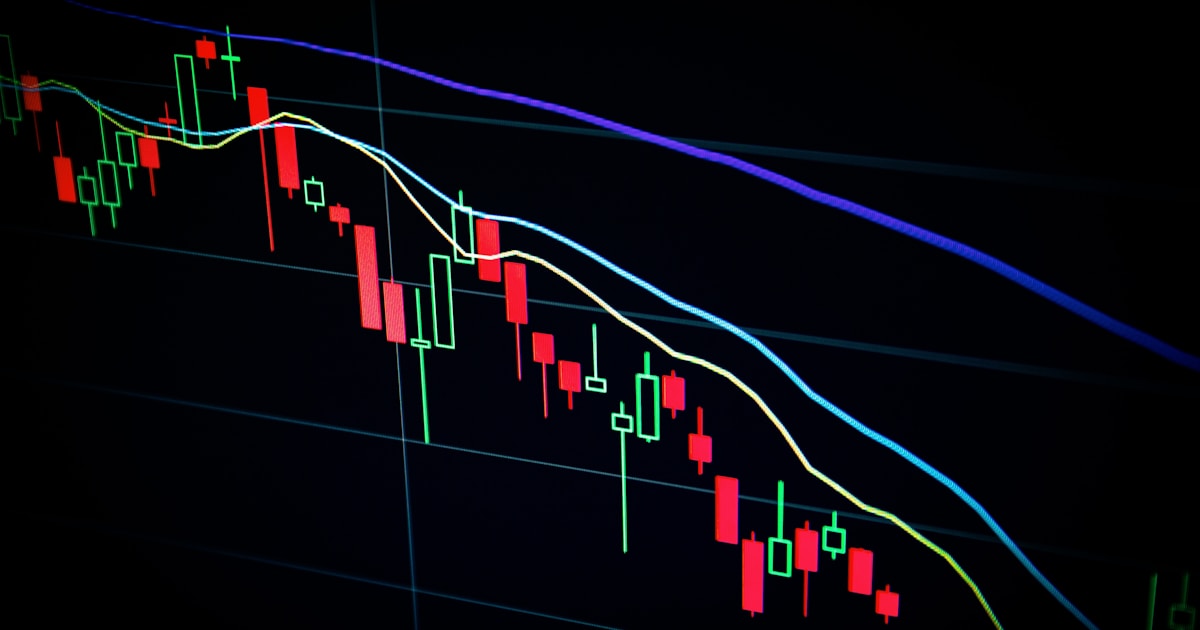
The crypto market’s open interest — the total value of outstanding derivative contracts — hit a staggering $21 billion in mid-2026, a 35% increase year-over-year despite volatile price action. This metric, often overlooked in favor of spot volume, provides critical insight into market sentiment, leverage, and potential systemic risks.
What’s counterintuitive is that while Bitcoin’s price dominance remains above 50%, open interest in altcoin futures has grown disproportionately, signaling a shift in speculative behavior. In my view, this divergence challenges the common assumption that Bitcoin leads all derivatives activity and reveals emerging vulnerabilities in altcoin markets.
📊 KEY DATA
Why Open Interest Matters More Than Spot Volume in 2026
Open interest (OI) represents the total number of outstanding derivative contracts that have not been settled. Unlike spot volume, which measures actual trading activity, OI reveals how much leverage and speculative capital is locked in the market at any moment.
In 2026, crypto spot trading volumes have plateaued around $80 billion daily, but OI surged to record highs. This divergence indicates that traders are increasingly using derivatives for exposure and hedging rather than spot buying — a sign of a maturing market but also a harbinger of amplified volatility.
Leverage Amplifies Price Movements
- Long and short positions with leverage magnify market moves; high OI can precede sharp price corrections when liquidations cascade.
- Glassnode data shows that Bitcoin’s average leverage in futures contracts rose from 2.1x in early 2025 to 2.7x mid-2026, while some altcoins exceed 5x on major exchanges.
The Surprising Divergence Between Bitcoin and Altcoin Open Interest
While Bitcoin’s price dominance remains steady near 55%, its share of total derivatives OI has declined from 65% in 2024 to 52% in 2026. Conversely, altcoin futures OI ballooned 40% year-over-year, driven largely by Ethereum, Solana, and emerging Layer 2 tokens.
What Drives Altcoin Leverage Growth?
- DeFi explosion: More on-chain activity fuels derivatives demand for hedging complex positions.
- Innovative contract types: Options and perpetual swaps on altcoins enable aggressive leverage strategies.
- Speculative mania: Retail traders chasing short-term gains amid bullish narratives.
This shift is a double-edged sword: it diversifies market interest but concentrates risk in less liquid, more volatile tokens, increasing systemic fragility.
Exchange Profiles: Who Holds the Most Open Interest?
Centralized exchanges (CEXs) remain dominant venues for derivatives trading, but decentralized derivatives protocols (DeFi DEXs) captured 18% of total OI by mid-2026, up from 6% in 2023.
Top 3 Exchanges by Open Interest (June 2026):
- Binance: $8.7B OI, 41% of total crypto derivatives
- Bybit: $3.9B OI, rapid growth due to altcoin offerings
- dYdX: $1.8B OI, leading decentralized derivatives platform
DeFi derivatives protocols attract users seeking transparency and reduced counterparty risk, but their liquidity constraints can exacerbate slippage during rapid market moves.
Table: Comparing BTC vs. Altcoin Open Interest Metrics
| Metric | Bitcoin | Altcoins (Top 5) |
|---|---|---|
| Open Interest ($B) | $13.5B | $7.5B |
| Average Leverage | 2.7x | 4.8x |
| 24h Liquidations ($M) | 320M | 210M |
| Dominance in OI (%) | 52% | 48% |

Key Takeaways for Traders and Analysts
- Monitor altcoin open interest closely: Rapid growth signals both opportunity and systemic risk.
- Beware of leverage spikes: Higher average leverage in altcoins increases liquidation risk during volatility.
- Use open interest as a sentiment gauge: Divergence between spot dominance and OI may precede major price moves.
- Consider exchange risk: CEXs provide liquidity but carry counterparty risk; DeFi derivatives offer transparency but can lack liquidity.
- Stay informed with on-chain data: Tools like Glassnode’s open interest metrics and CoinMarketCap derivatives data are essential for real-time analysis.
Stay Ahead of the Market
Get daily crypto analysis, price breakdowns, and on-chain insights from Bitcoin Fast Community — updated 4x daily.
Read All Analysis →Free Tool
Bitcoin ROI Calculator
Calculate the exact return on any Bitcoin investment since 2012 — and compare against S&P 500 and gold.
Related Crypto Guides
Frequently Asked Questions
Q: What is open interest in the crypto market?
A: Open interest refers to the total number of outstanding derivative contracts, such as futures or options, that have not been settled. As of June 2026, crypto open interest reached approximately $21 billion, indicating the scale of leveraged positions in the market.
Q: Why is open interest important for crypto traders?
A: Open interest provides insight into market sentiment and leverage. High open interest combined with increased leverage often precedes heightened volatility and potential liquidations. For example, Bitcoin futures leverage averaged 2.7x in 2026, amplifying price swings.
Q: Has Bitcoin’s dominance in open interest changed in 2026?
A: Yes, Bitcoin’s share of total crypto derivatives open interest declined from 65% in 2024 to 52% in 2026, as altcoin futures gained 40% year-over-year growth, reflecting shifting speculative focus.
Q: How do centralized and decentralized exchanges compare in derivatives open interest?
A: Centralized exchanges still hold the majority, with Binance leading at $8.7 billion in OI. Decentralized derivatives platforms, like dYdX, grew to 18% market share by 2026, offering transparency but facing liquidity limits.
Q: What risks does rising altcoin open interest pose?
A: Altcoins typically have higher leverage (up to 5x) and lower liquidity, making them more vulnerable to sudden liquidations and price crashes. This concentration of leveraged positions in altcoins increases systemic market risk.